
Review · ASWAN HOT AIR BALLOON RIDES
4 Days 3 Nights Cruise From Aswan To Luxor (Abu Simbel&Hot Air Balloon)
The most memorable part of this four-day Nile cruise is the way it links Egypt’s great monuments by water. You begin in Aswan, visit the relocated temples of Philae and Abu Simbel, then sail north toward Luxor for Edfu, Karnak, the Valley of the Kings, and a dawn balloon ride.
I like the strong mix of major sights and river travel, and I like that meals, transfers, a guide, and three nights aboard a 5-star ship are included. The main catch is that entrance fees are not included, so the $550 price is not your final cost.
- Abu Simbel is included: See Ramses II’s huge rock-cut temple and its four colossal statues.
- Philae requires a boat ride: Reach the temple on Aglika Island by water taxi.
- Three nights on the Nile: Your cabin, breakfast, lunch, and dinner are included.
- Luxor from above: The hot-air balloon ride gives you an early view across the city.
- A full ancient-Egypt circuit: Visit Edfu, Luxor Temple, Karnak, the Valley of the Kings, and Hatshepsut’s temple.
- Private group format: Only your group participates, with an Egyptology guide and air-conditioned transport.
Why this Nile route works so well
A Nile cruise is not just a floating hotel between sightseeing stops. It changes the pace of an Egypt trip. Instead of packing and unpacking for every ancient site, you return to the same cabin while the river carries you between Aswan and Luxor.
This four-day route is particularly strong for first-time visitors who want the main sights in a compact schedule. You get Aswan’s temples, Abu Simbel, the well-preserved Temple of Horus at Edfu, and Luxor’s major monuments. The route also includes a hot-air balloon flight, which adds a different view of the river and the ancient sites.
The pace is not slow. You will have early starts and several major stops in a short time. I would choose this trip for an efficient introduction to Upper Egypt, not for a long, lazy cruise with hours of free time.
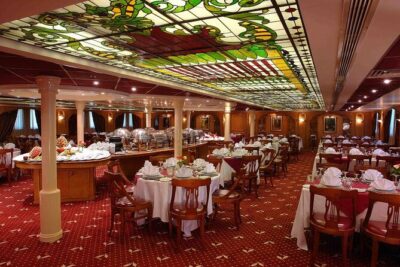
The cruise ship has an onboard swimming pool, which matters after touring temples in the heat. Your cabin includes its facilities, and three breakfasts, three lunches, and three dinners are included. Drinks and extra meals are not covered, so keep some Egyptian pounds or another accepted payment method available for purchases onboard and during the visits.
Day one: Aswan, the High Dam, and Philae
Your first transfer takes you from the train station or hotel to the Nile cruise ship. Pickup is offered, and an air-conditioned vehicle is included for the land portions of the program. The schedule gives you a practical start if you are arriving in Aswan by train or already staying in town.
The first listed stop is the High Dam, built in the 1960s to help generate electricity and protect Egypt from destructive flooding. It is an engineering site rather than an ancient monument, but it explains much about modern Egypt and the Nile. The dam also changed the setting of several older temples, making the next stop especially important.
Philae Temple sits on Aglika Island, south of the old Aswan Dam. You reach it by water taxi, so the visit begins with a short ride across the water rather than a simple road transfer. That approach is part of the appeal. The temple complex appears as a carefully arranged group of columns, gateways, and courtyards on an island setting.
Philae was moved to its present location after the High Dam threatened to submerge it. This is one of the clearest places in Egypt to see how modern engineering and ancient monuments are tied together. The relocation preserved the temple, but it also means you are looking at a reconstructed setting rather than the original location.
The complex is dedicated mainly to Isis and is among the most picturesque ancient sites in Egypt. Give yourself time to look beyond the large walls and gateways. The island setting, the water taxi, and the story of the temple’s rescue make Philae feel different from the more landlocked sites later in the trip.
You return to the ship for dinner and your first night onboard. Since the package includes three dinners, you do not need to arrange an evening meal after a full day of transfers and sightseeing.
More Abu Simbel and Balloon Tours in Aswan:
- 4-Days Nile Cruise From Aswan To Luxor including Abu Simbel and Hot Air Balloon
★ 5.0 · 3,142 reviews - 4-Day 3-Night Nile Cruise from Aswan to Luxor&Abu Simbel+Balloon
★ 5.0 · 2,023 reviews - 4-Day 3-Night Nile Cruise from Aswan to Luxor including Abu Simbel, Air Balloon
★ 4.5 · 612 reviews
Day two: Abu Simbel and Ramses II
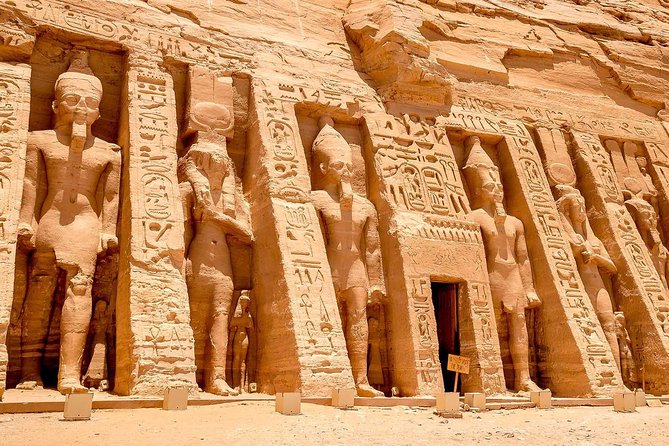
Abu Simbel is the big reason many people choose this particular cruise package. The temples lie on the west bank of the Nile, south of Aswan, and the visit takes you to one of Egypt’s most dramatic monuments.
The main temple was carved from the mountain between 1274 and 1244 BC. It was dedicated to Ramses II and to the gods Ra-Horakhty, Amun, and Ptah. Four enormous statues of Ramses II sit across the front, facing south. Their scale is hard to grasp until you are standing before them.
Inside, the design repeats the idea of royal power and divine order. The temple has a symmetrical plan, twin entrances, linked hypostyle halls, and twin sanctuaries. Carvings show the gods on either side, and the arrangement may reflect the presence of two priesthoods.
The second temple at Abu Simbel has a twin dedication and is associated with Ramses II’s queen, though the supplied schedule focuses on the temple complex rather than setting out a separate guided description for every room. You should allow time for both structures. The pair makes the visit more than a single giant facade.
The practical point is that Abu Simbel adds a demanding excursion to an already full cruise schedule. The reward is enormous, but you should expect a long day and plan your energy carefully. Wear practical shoes, carry water, and protect yourself from the sun. Those are sensible precautions for any major Egyptian archaeological site, especially one reached as an excursion from Aswan.
Your qualified Egyptology guide is important here. Abu Simbel can look like a grand wall of statues if you do not understand the religious and political purpose behind it. A guide can help you read the repeated images, the temple’s symmetry, and Ramses II’s effort to project strength at Egypt’s southern frontier.
Day three: Edfu, Luxor Temple, and Karnak
The third day brings you to Edfu, one of the best-preserved ancient monuments in Egypt. The Ptolemaic temple was built between 237 and 57 BC and dedicated to Horus, the avenging son of Isis and Osiris.
Edfu’s preservation is a major part of its appeal. Desert sand covered the temple after the pagan cult was banned, helping protect its walls and roof. Because the roof remains intact, the interior can feel enclosed and atmospheric in a way that open-air ruins do not.
Look closely at the carved walls and the formal sequence of courtyards and halls. The temple is a reminder that ancient Egypt’s religious traditions continued long after the New Kingdom pharaohs. Its later date also gives you a useful contrast with Abu Simbel and the New Kingdom monuments around Luxor.
The next major stop is Luxor Temple, largely built by Amenhotep III and Ramses II. It sits in the middle of the modern town and is also known as the Southern Sanctuary. Its original role was tied to the annual Opet festival, when statues of Amun, Mut, and Khonsu were carried from Karnak along the Avenue of Sphinxes.
That festival connection helps you understand the temple’s layout. Luxor Temple was not simply a place for private worship. It formed part of a large public and religious celebration, with the gods’ statues brought from Karnak during the inundation.
Karnak completes the day’s pair of Luxor monuments. The complex is dominated by the Temple of Amun-Ra, one of the world’s largest religious complexes. Its famous hypostyle hall is filled with giant papyrus-shaped columns, creating one of the most powerful interior spaces in Egypt.
Karnak is vast, and a short visit cannot cover everything. I would focus on the main processional route, the great columns, and the relationship between Karnak and Luxor Temple. Your guide can make the sequence easier to follow, especially when the scale of the site begins to blur into a parade of pylons, statues, and inscriptions.
The biggest issue on day three is simple: there is a lot to see. Edfu, Luxor Temple, and Karnak each deserve time, but the schedule gives you an overview rather than a slow archaeological study. That is a fair trade for covering so much in four days.
Day four: Balloon views over Luxor
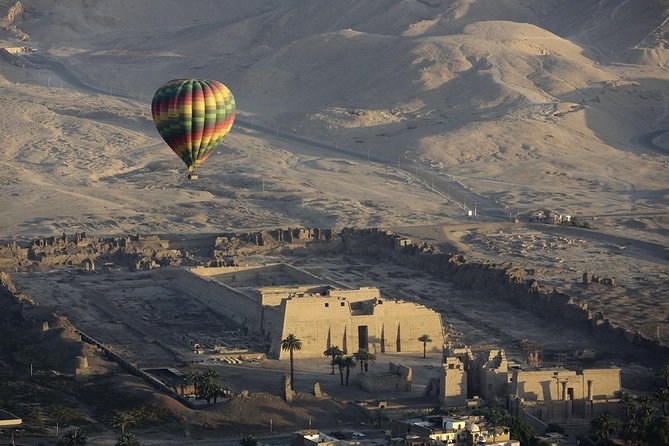
The hot-air balloon ride begins the final day with a view few ground-based tours can match. From above, you see Luxor as a meeting point between the Nile, the city, farmland, desert, and the west bank’s ancient sites.
The exact flight timing is not provided, but hot-air balloon rides generally require an early start. Treat this as a dawn activity and keep your schedule flexible. The ride is included in the price, which makes it a useful addition rather than an optional extra you need to arrange separately.
The view also helps you understand the placement of the ancient monuments. The west bank was used for royal burials from about 2100 BC, but the pharaohs of the New Kingdom period, from 1550 to 1069 BC, selected the isolated Valley of the Kings for their tombs.
The Valley of the Kings contains 63 royal tombs. You should not expect to enter every one. The included information identifies the valley visit but does not specify which tomb entry tickets are covered, and entrance fees are excluded from the package. Ask your guide which admissions are available on the day and budget for them separately.
The valley’s location was shaped by the pyramid-like peak of Al Qurn, known as The Horn. The setting is stark and enclosed, a sharp contrast to the green river corridor visible from the balloon. The tombs themselves are the main attraction, with painted corridors and burial chambers where access is permitted.
You then visit Deir Al Bahri and the Temple of Hatshepsut. The first sight is the rugged limestone cliff rising nearly 300 meters above the desert plain. At its base, Hatshepsut’s temple uses broad terraces and straight lines that can look surprisingly modern.
Much of the temple has been reconstructed, so it is best understood as a restored monument rather than an untouched ruin. Even so, its relationship with the cliffs is remarkable. The building seems to grow out of the rock, and the setting gives the visit a strong sense of place.
More Four-Day Trips in Aswan:
- 4 Days Nile Cruise from Aswan to Luxor including Abu Simbel and Hot Air Balloon
★ 4.5 · 356 reviews - 4-Day 3-Night Nile Cruise from Aswan to Luxor With Balloon and Abu Simbel
★ 5.0 · 327 reviews - From Aswan:4 Days Nile Cruise Luxor Abu Simbel & Air Balloon
★ 4.4 · 310 reviews - 4-Day Nile Cruise sails Aswan to Luxor&Abu Simbel.Hot air Balloon
★ 4.5 · 247 reviews
What the $550 price really covers
At $550 per person, the cost is reasonable if you want a bundled Nile experience rather than separate transport, guides, lodging, meals, and excursions. The package includes three nights aboard a 5-star cruise ship, a cabin with facilities, an Egyptology guide, arrival and departure assistance, an air-conditioned vehicle, the balloon flight, taxes, and charges.
You also receive three breakfasts, three lunches, and three dinners. That removes much of the daily meal planning and makes the cruise easier to manage during a busy sightseeing schedule.
The price does not include entrance fees, tips, extra meals, or beverages. Entrance fees are the most important extra because the itinerary includes several major archaeological sites. Before booking, ask for the current admission costs for Abu Simbel, Philae, Edfu, Luxor Temple, Karnak, the Valley of the Kings, and Hatshepsut’s temple.
The advertised format is a private activity for your group only. That gives you a better chance to ask questions and adjust the pace slightly than you would on a large shared coach tour. It does not mean the cruise ship itself is private. The private format applies to the tour and sightseeing group.
Who should book this cruise
I would recommend it to you if you have four days and want a concentrated introduction to the Nile corridor. It suits people who value famous monuments, organized transport, included meals, and a guide who can explain the sites as you go.
It also suits couples, families, and small groups who prefer private touring. Most people can participate, and the experience is near public transportation, making the arrival and departure arrangements more practical.
You may want a different plan if you dislike early starts, long sightseeing days, or extra costs at archaeological sites. The combination of Abu Simbel, Edfu, Luxor, and the west bank is rewarding, but it is not a relaxed schedule.
The two short Italian comments supplied with the tour place special emphasis on the guide’s attentive, patient service and on the balance between cost and the beauty of the cruise. That is useful advice: the quality of the guiding matters as much as the ship when you are seeing temples this dense with detail. No guide name is provided, so you cannot request a particular guide in advance.
Free cancellation is available up to 24 hours before the experience start time for a full refund. Changes or cancellations inside that window are not accepted or refunded.
Should you book the Aswan to Luxor cruise?
Book it if you want the classic Nile route with the major stops handled in one package, and if Abu Simbel and the hot-air balloon ride are high on your list. The combination is hard to match in only four days.
Before paying, confirm the sailing schedule, current entrance fees, the exact balloon timing, and what happens if weather affects the flight. Also budget for tips, drinks, and admissions. With those extras understood, this is a strong value for a compact Egypt itinerary, especially if you prefer a private sightseeing group and an onboard pool between temple visits.
FAQ
How long is the Nile cruise?
The experience lasts approximately four days and includes three nights aboard a 5-star Nile cruise ship.
Does the cruise travel from Aswan to Luxor?
Yes. The stated route begins in Aswan and finishes with sightseeing in Luxor, including the west bank monuments.
Is Abu Simbel included?
Yes. The itinerary includes the main Abu Simbel temple and the associated twin temple complex.
Is the hot-air balloon ride included?
Yes. A hot-air balloon ride over Luxor is included in the package.
Are meals included?
Breakfast, lunch, and dinner are included for three days. Extra meals and beverages are not included.
Are entrance fees included?
No. Entrance fees are excluded and must be paid separately.
Is transportation provided?
Yes. Pickup is offered, arrival and departure assistance are included, and an air-conditioned vehicle is used for the land transfers and sightseeing.
Is this a private tour?
Yes. Only your group participates in the private tour activity, with a qualified Egyptology guide.
New this week over Aswan
- 4-Days Nile Cruise From Aswan To Luxor Abu Simbel and Air Balloon★ 4.5 · 2 reviews
- (3-Nights Cruise From Aswan To Luxor & Balloon, Abu Simbel)★ 4.5 · 23 reviews
- 4 Days Nile Cruise &Hot Air Balloon on M/S Movenpick Royal Lilly★ 5.0 · 4 reviews
- 8 Nights Egypt Tour,Cairo,Luxor,Aswan&Abu Simbel,Nile Cruise,Hot Air Balloon★ 4.5 · 11 reviews
- 4-Day Nile Cruise: Aswan to Luxor & Abu Simbel + Hot Air Balloon★ 4.5 · 35 reviews
- Luxor: 4-Night Nile cruise , Hot Air balloon , west bank , abu simbel★ 5.0 · 3 reviews
- Amazing 2 Nights Cruise From Aswan to Luxor including Tours and Hot Air Balloon★ 5.0 · 5 reviews
- 3-Nights Cruise From Aswan To Luxor, Hot Air Balloon,Abu Simbel★ 4.5 · 46 reviews
Aswan Hot Air Balloon Rides, compared.
4-Days Nile Cruise From Aswan To Luxor including Abu Simbel and Hot Air Balloon
Read our review →
4-Day 3-Night Nile Cruise from Aswan to Luxor&Abu Simbel+Balloon
Read our review →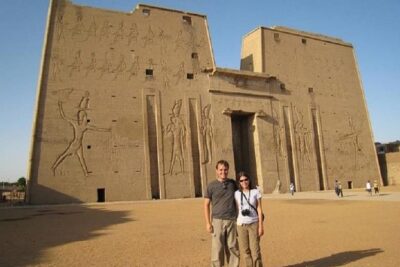
4-Day 3-Night Nile Cruise from Aswan to Luxor including Abu Simbel, Air Balloon
Read our review →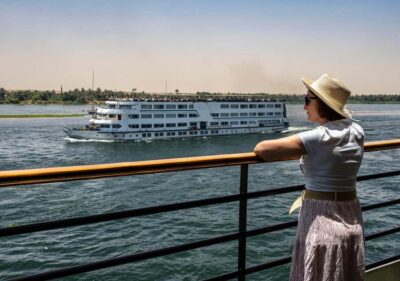
4-Days Nile Cruise From Aswan To Luxor including Abu Simbel and Hot Air Balloon
Read our review →4 Days Nile Cruise from Aswan to Luxor including Abu Simbel and Hot Air Balloon
Read our review →
4-Day 3-Night Nile Cruise from Aswan to Luxor With Balloon and Abu Simbel
Read our review →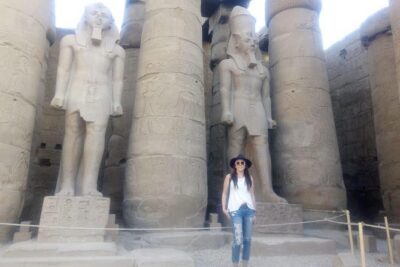
4-Days Nile Cruise Aswan&Luxor,Hot Air Balloon&Abu Simbel.Hot deal
Read our review →Lists this flight appears in