
Review · LUXOR HOT AIR BALLOON RIDES
5-Day Nile Cruise Luxor to Aswan Abu Simbel and Hot-Air Balloon
The best part of this five-day Nile cruise is the rhythm: ancient temples by day, a floating hotel by night. You move between Luxor and Aswan without repeatedly packing your bags, while the Nile slips past your window and the desert gives way to palms, villages, and open water.
I like the wide range of major sights, from Karnak and the Valley of the Kings to Edfu, Kom Ombo, Philae, and Abu Simbel. I also like the human side of the trip. Guides including Mohamed Moniem and Mohamed Abdel Monem receive special praise for clear explanations, patience, punctual planning, and help when problems arise.
The main point to check before paying is the cost of admissions and add-ons. The tour description says listed sites are included, yet each stop also says admission is not included. Abu Simbel is shared and excludes its ticket, while the hot-air balloon ride and Nubian Village visit cost extra.
Key points at a glance
- Four nights on the Nile: Your accommodation, meals, and transport are combined in one moving base between Luxor and Aswan.
- The great temples are covered: Karnak, Luxor, Hatshepsut, Edfu, Kom Ombo, and Philae form a strong first look at ancient Egypt.
- Abu Simbel is an added highlight: The excursion is shared and does not include the entrance ticket.
- Guides matter here: Mohamed Moniem and Mohamed Abdel Monem are singled out for history, organization, language support, and personal assistance.
- The price needs clarification: At $764.71 per person, ask exactly which entrance tickets, cruise category, and optional activities are included.
- Balloon fans should plan ahead: The hot-air balloon ride is not included, despite appearing in the experience title.
Why a Nile cruise is such a useful way to see Egypt
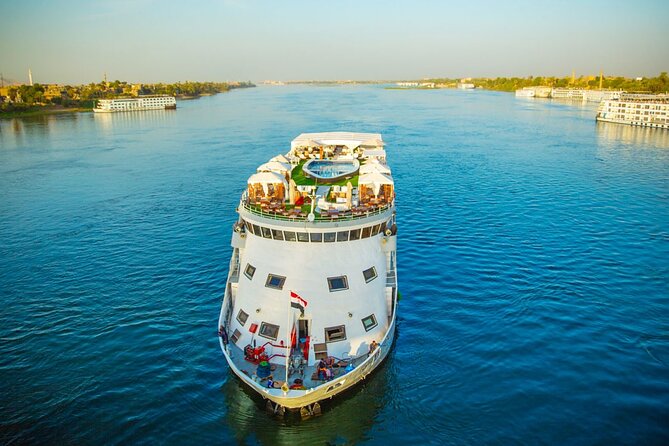
A Nile cruise makes sense because Luxor and Aswan are not close neighbors. Instead of arranging new cars, trains, hotels, and day tours every day, you unpack once and let the ship carry you south.
That convenience is the real value of the format. You wake up near a different archaeological site, spend a few hours exploring, then return to the same room. Between visits, the sundeck gives you a front-row seat to the river. The view is not constant spectacle, and that is part of its charm. You might see cultivated fields, low villages, desert edges, fishermen, and long quiet stretches of water.
The ship is described as having decorated public rooms, comfortable cabins, a spacious sundeck, and attentive staff. Meals are served buffet style, with breakfast, lunch, and dinner listed for all four nights. You should still confirm the exact ship name and cabin category before booking, since the material refers to a Royal Elite cruise in some customer comments but does not clearly define the ship for every departure.
The maximum group size is 20 people. That is large enough to keep the price practical but small enough for a guide to manage a site visit without losing everyone immediately. At busy temples, your group may still feel spread out, so listen carefully for meeting times and carry the guide’s contact details.
More Nile Cruise and Balloon Packages in Luxor:
- From Luxor: 3-Night Nile Cruise to Aswan and Hot Air Balloon
★ 3.7 · 297 reviews - From Luxor: 5-Day Nile Cruise to Aswan with Balloon Ride
★ 4.2 · 168 reviews - Private Tour to Luxor West and East Banks with Hot Air Balloon,Felucca and lunch
★ 5.0 · 162 reviews
Day one: Karnak and Luxor Temple in the heart of Thebes
The first day introduces you to Luxor, the ancient city once known as Thebes. Karnak is the larger and more demanding visit, with about two hours suggested for the complex.
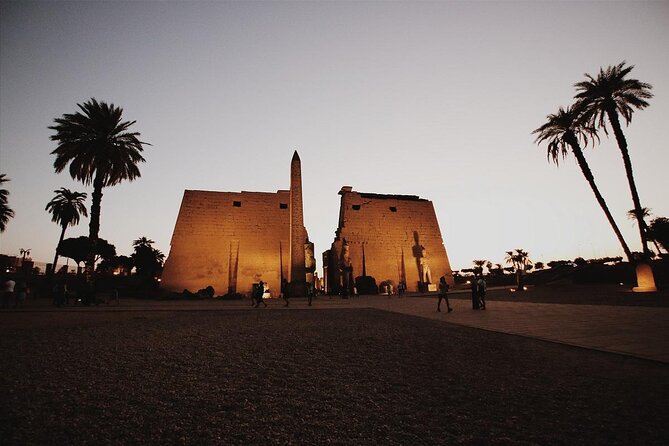
Karnak is not one single temple in the usual sense. It is a huge sacred precinct built and expanded over many centuries, with the main area linked to Amun Ra. The scale is what stays with you: columns, gateways, courtyards, and damaged but still imposing religious structures spread across a broad area.
Give yourself time to look up and around. It is easy to treat Karnak as a checklist stop, but the size only makes sense when you walk through it slowly. Your guide can help explain how different rulers added to the site and why it became such an important religious center.
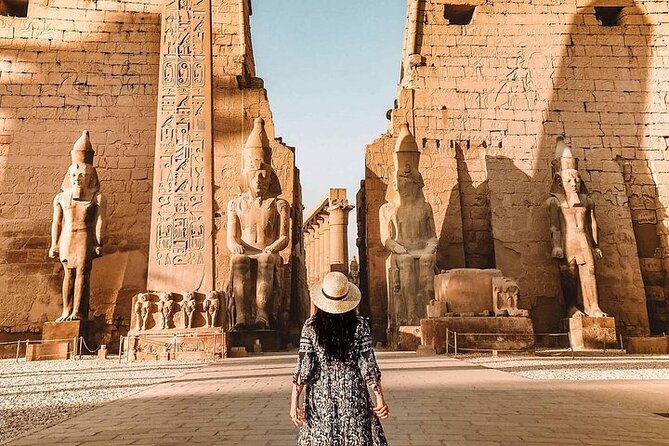
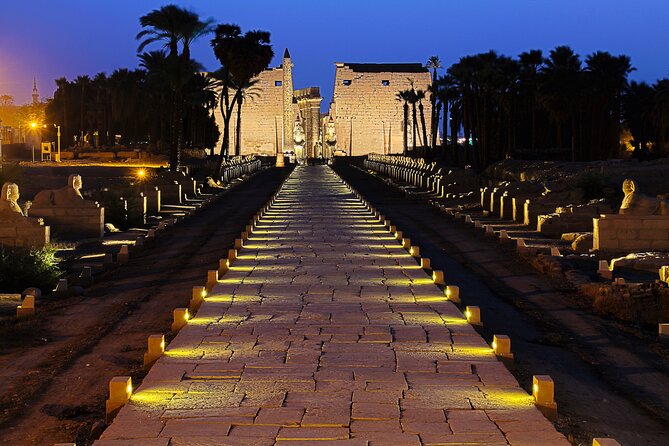
Luxor Temple is smaller and more compact. It sits in the middle of modern Luxor, which gives the visit a different feel from Karnak. The temple was linked to Amun Re and was developed by several rulers, including Ramses II.
I like the contrast between the two stops. Karnak gives you scale and layers. Luxor Temple feels more direct, with its monumental entrance and urban setting. The scheduled visit is about one hour, so you will have less time to wander.
The wording around admissions matters from the first day. Both stops are marked optional and say that tickets are not included, while the inclusion list says all sites in the program are included. Ask for a written breakdown before arrival. This is especially important if you are comparing the $764.71 price with other cruises.
Day two: royal tombs and Queen Hatshepsut
Day two moves to Luxor’s west bank, where the desert hills hold the royal burial grounds. The Valley of the Kings is allotted about two hours, giving you time to visit the standard tombs included in your entry ticket and, if available, add a special tomb.
The tombs are not grand from the outside. Their value is underground, in the painted corridors and burial chambers cut into the rock. Color can survive here in a way that surprises first-time visitors, though some tombs are more impressive than others and conditions can change.
Tutankhamun’s tomb is listed as a separate 20-minute stop. It is small, and the famous young king’s burial chamber is not the largest in the valley. Its appeal comes from the story and the surviving burial context. The special entrance fee should be confirmed, since premium tombs often use separate tickets.
The Temple of Hatshepsut at Deir el Bahari gives the day a strong architectural counterpoint. Its terraces are built into the cliffs, with broad lines that make the monument feel carefully framed by the surrounding rock. The visit is planned for two hours, which is generous enough for an explanation of Hatshepsut’s reign and time to study the reliefs.
The Colossi of Memnon is a short stop of about 30 minutes. These two statues of Amenhotep III are easy to reach and work well as a quick photo and history break. Do not expect a long visit. The value is the sheer size of the figures and their connection to a much larger temple complex that no longer survives in full.
This is likely the busiest sightseeing day. Wear practical shoes, protect yourself from the sun, and carry water. The program includes many important places, but it also asks you to absorb a lot of information in a short period.
Day three: Edfu and Kom Ombo by the river
The cruise portion becomes more central on day three, with visits to Edfu and Kom Ombo. This is where the trip feels most like a classic Nile journey: you see the river from the ship, then step ashore for temples built long after the great pyramid age.
Edfu Temple is dedicated to Horus and was built during the Ptolemaic period between 237 and 57 BC. It is one of Egypt’s best-preserved temples, partly because desert sand protected it after the old pagan cult ended.
The roof remains largely intact, which changes the mood inside. Instead of looking only at broken columns beneath the sky, you enter rooms with a stronger sense of enclosure. Reliefs and inscriptions are easier to imagine as part of a working religious building rather than an open ruin.
The visit is planned for two hours. That is enough time for a proper explanation, though the approach and site transport can affect how relaxed the stop feels. Stay with your group and note the meeting point. Temple visits on a cruise operate around the ship’s sailing schedule.
Kom Ombo is unusual because it is a double temple. One side honored Sobek, the crocodile god, while the other was linked to Horus. The structure dates mainly from the Ptolemaic period, with later Roman additions.
The symmetry gives your guide a clear way to explain how two religious traditions shared one complex. It also makes Kom Ombo feel different from Edfu. Edfu is preserved and enclosed. Kom Ombo is more open, with its river setting and partial remains adding to the atmosphere.
Both stops are listed at about two hours, but the schedule can feel full when you include boarding, meals, and sailing. I would treat the ship itself as part of the experience rather than expect every hour to be packed with organized activity.
More Abu Simbel and Balloon Tours in Luxor:
- 4 Nights Luxor to Aswan Nile cruise with Abu Simbel&Air Balloon
★ 5.0 · 155 reviews - 4 nights Luxor to Aswan Nile Cruise with Abu Simbel & Air Balloon
★ 4.5 · 102 reviews - 5-Day Luxor and Aswan Nile Cruise with Abu Simbel and Hot Air Balloon
★ 5.0 · 60 reviews - 4-Days 3-Nights Cruise From Luxor to Aswan including Hot Air Balloon&Abu Simbel
★ 5.0 · 39 reviews
Day four: Philae, the High Dam, and a sunset felucca
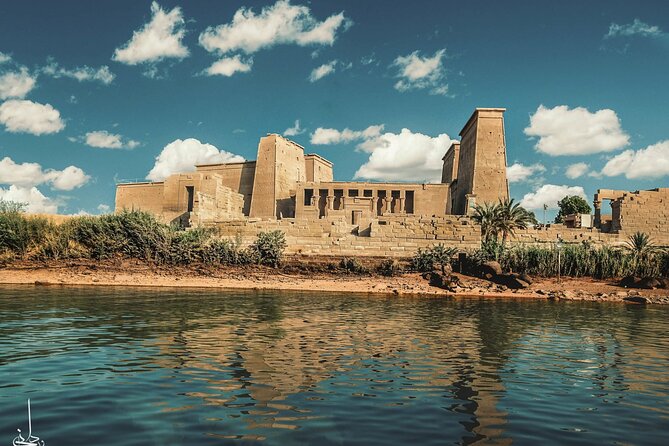
Philae is one of the most memorable stops because the temple sits on an island and has a modern rescue story behind it. Dedicated to Isis, the complex was moved under a UNESCO project when the Aswan Dam threatened the original site.
The setting matters. The temple was relocated and arranged to resemble its former home, with sanctuaries, shrines, Trajan’s Kiosk, and the structure often called Pharaoh’s Bed. The water around the island makes this visit feel different from the inland temples.
Allow about two hours. You will want time for the main buildings and for the ride across the water, although the exact transfer details are not specified. Keep a little patience in reserve, since island visits depend on boat timing.
The Aswan High Dam follows, with about 40 minutes planned. It is a practical stop rather than a beautiful ruin. Built between 1960 and 1970, the dam changed flood control, power production, agriculture, and the shape of the modern Nile.
It also explains why sites such as Philae had to be moved. Without that context, the temple relocation can seem like an isolated archaeological project. The dam connects ancient preservation with modern engineering and national development.
At sunset, an optional felucca ride offers a slower hour on the Nile. This is one of the most appealing extras because it gives you a different view from the cruise ship. The sailboat is smaller, quieter, and closer to the water. The ride is listed as free admission, but confirm whether any local boat charge or gratuity is expected.
A Nubian Village visit is another optional add-on. It includes a visit to a Nubian house and authentic food, according to the tour details. It is not part of the base package, so budget for it separately if local culture and home life are priorities for you.
Abu Simbel and the title problem you should clarify
Abu Simbel is advertised as part of the experience, and that is a major reason to consider this cruise. The temples, cut into the rock and associated with Ramses II, are far enough from Aswan that arranging the visit independently can be a nuisance.
Here, the excursion is described as a shared trip and the entrance ticket is not included. The schedule does not assign Abu Simbel a separate day or time, so ask the operator exactly when it takes place, how the transfer works, and whether it happens before checkout or after the cruise.
There is a similar issue with the hot-air balloon. The title includes a balloon ride in Luxor, but the exclusions clearly say it is not included. Treat it as an optional purchase, not as part of the $764.71 package.
This does not make the cruise poor value. It simply means you should compare like with like. A cheaper-looking cruise may leave out more tickets and transfers, while a higher price may include them. Get the final cost in writing.
What the $764.71 price gets you
At $764.71 per person, the package includes four nights aboard the ship, air-conditioned transfers, four breakfasts, four lunches, and four dinners. It also lists all fees and taxes, the named sightseeing program, Abu Simbel as a shared excursion without the ticket, and visits to a papyrus factory, an alabaster workshop, and a Nubian perfume lab in Aswan.
Those shopping stops are worth understanding. They may interest you if you want to see traditional products being made or explained. If you dislike retail visits, ask how much time they take and whether they are fixed parts of the schedule.
The strongest value is the combination of lodging, meals, transport, and a guide across several days. You are not paying only for a boat cabin. You are buying a structured route through the main ancient sites between Luxor and Aswan.
You should budget for guide, driver, and cruise staff tips. The recommended tipping amount is not provided, so ask before departure. Also set aside money for entrance tickets if the operator confirms that they are excluded, plus the hot-air balloon and Nubian Village options.
Guides, service, and the practical side of the trip
The guide can make or break a Nile cruise. The sites are enormous, the history is layered, and the schedule is tight. A good guide turns a row of columns into a story you can follow.
Mohamed Moniem is praised for strong history explanations, humor, energy, punctual planning, and personal warmth. Mohamed Abdel Monem is also praised for clear guidance, careful logistics, multilingual support, and stepping in during an emergency. You cannot guarantee a particular guide unless the operator confirms it, but these names give you a useful standard to ask about.
The cruise staff are described as friendly and helpful, with welcoming service. Food is buffet style, which gives you flexibility but may feel repetitive over four nights. The ship has a sundeck and public sitting areas, so you can choose between social time and a quiet view.
Transfers are air-conditioned. Pickup is offered, and the final transfer can take you to Aswan airport, the train station, or an Aswan hotel after breakfast on day five.
If you are coming from Cairo, plan the connection carefully. A long overland journey to Luxor can take much of a day. A flight or a sleeping train may be more practical, depending on your wider itinerary.
Who should book this cruise?
I would recommend it to first-time visitors who want the major Luxor and Aswan sights arranged in one package. Families can also benefit from the fixed schedule and included meals, especially when a helpful guide is assigned.
It suits you best if you enjoy ancient sites but do not want to organize every transfer yourself. The cruise also works well for anyone who values river views and a comfortable base more than long, independent visits at each monument.
It may not suit you if you want a slow archaeological trip. The program is busy, several stops are marked optional, and the exact ticket arrangements need clarification. You should also think twice if the hot-air balloon is the main reason you clicked on the tour, since it is not included.
Should you book it?
Book this Nile cruise if you want a practical five-day route covering the major temples, royal tombs, Aswan sights, and Abu Simbel, with meals, accommodation, transfers, and guide support in one booking.
Before you commit, ask three direct questions: Which entrance tickets are included? What ship and cabin category will I receive? What exactly is included in the Abu Simbel transfer? If the answers are clear and the balloon is treated as an optional extra, $764.71 can be a fair price for the amount of sightseeing and support provided.
FAQ
How long is the Nile cruise?
The experience lasts approximately five days and includes four nights of accommodation aboard the cruise ship.
Where does the cruise begin and end?
The route begins in Luxor and ends in Aswan. After breakfast on day five, a representative can accompany you to Aswan airport, Aswan train station, or an Aswan hotel.
Is Abu Simbel included?
An Abu Simbel trip is included as a shared excursion, but the entrance ticket is not included according to the tour details.
Is the hot-air balloon ride included?
No. The hot-air balloon ride in Luxor is listed as an extra and is not included in the package price.
Are meals included?
Yes. The package lists four breakfasts, four lunches, and four dinners during the four-night cruise. Meals are described as buffet style.
Can I cancel for a full refund?
Yes, if you cancel at least 24 hours before the experience start time. Cancellations made less than 24 hours in advance are not refunded, and changes within that period are not accepted.
More Five-Day Trips in Luxor
- 5-Day Nile Cruise to Aswan from Luxor with Hot Air Balloon Ride
★ 4.5 · 87 reviews - 5-Day 4-Night Nile Cruise from Luxor to Aswan include Balloon
★ 5.0 · 78 reviews - 5-Day Adventure Nile Cruise from Luxor to Aswan & Hot Air Balloon
★ 5.0 · 44 reviews - 5-Day Nile Cruise From Luxor to Aswan with Hot Air Balloon
★ 5.0 · 42 reviews
New this week over Luxor
- PRIVATE HOT AIR BALLOON IN LUXOR RIDE IN SMALL LUXURY GROUP FLIGHT up to 12★ 5.0 · 2 reviews
- east & west bank of luxor with balloon trip★ 5.0 · 9 reviews
- 2 Days Luxor Private Tour with Balloon Ride★ 5.0 · 2 reviews
- Luxury Sunrise Hot Air Balloon ride luxor with pick up & drop off★ 5.0 · 19 reviews
- Luxor Tours: City Tour,Hot Air Balloon,Kings Valley,Sailing Felucca,Camel Ride★ 4.5 · 19 reviews
- Luxor : Vip Hot Air Balloon★ 4.5 · 10 reviews
- Sunrise Hot Air Balloon Ride in Luxor, Egypt – VIP★ 5.0 · 4 reviews
- Luxor Full Day Tour with Hot air Balloon Trip★ 5.0 · 2 reviews
Luxor Hot Air Balloon Rides, compared.
Hot Air Balloon Ride in Luxor Egypt with Transfers Included
Read our review →
2-Day Luxor Tour with Hotel, Balloon, & Boat Ride
Read our review →
Luxury Sunrise Balloon Ride in Luxor with Hotel Pickup
Read our review →
Sunrise Hot Air Balloon Over the Historical sites in Luxor
Read our review →
Sunrise Ballooning Luxor with Transfers Included
Read our review →Lists this flight appears in